Get 20% off all beauty treatments!
Offer ends 07/11/26. Tap here for details.
Clinical skincare
Advanced Electrolysis
Advanced Electrolysis uses the same treatment principles as Electrolysis for permanent hair removal, but combines them with specialised techniques to thoroughly and effectively treat a range of skin conditions, blemishes and other dermal imperfections.
It is an exceptionally safe and popular treatment, based on well-established and refined technologies that have been used in professional skincare for over a century, with clinically-proven results.
Your safety is always our absolute priority.
The Belsanté aesthetician who will carry out your Advanced Electrolysis treatments to the very highest standard is a fully-qualified Electrologist, with over three decades of experience.
Find out more about
Advanced Electrolysis
Tap on the drop-down sections below for further details about this treatment.
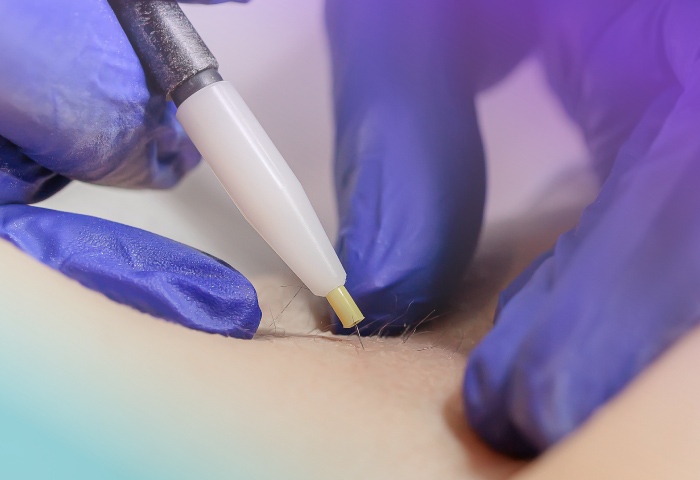
In Advanced Electrolysis, a tiny and very fine needle (or 'probe') enters the uppermost layers of the skin° - over, around and/or directly inside the skin lesion or blemish being treated.
A light electrical current - either diathermy or galvanic current, or a combination of both - is then passed through the probe.
By expertly applying precise levels of current to specific points on the skin, the Electrologist is able to use the electrical energy to break down and remove the unwanted skin growth or blemish, and cauterise the area to limit recurrences in the future.
The efficacy of the treatment varies depending on the specific skin condition, lesion, blemish or imperfection being treated. Your Belsanté aesthetician will clearly explain the kind of results you can reasonably expect from the treatment during your initial Clinical Skincare Assessment.
For your safety, we only perform Advanced Electrolysis treatments with the very best equipment and single-use needles from Sterex, a world-leader in electrolysis technology and training.
Most people do not experience pain during an Advanced Electrolysis treatment, but there is a certain amount of discomfort involved.
When the electrical current passes through the probe, a tiny burst of energy is released into the skin; this results in a sensation that people variously describe as like a tingle, mild heat, or even a minor 'sting'.
However, everyone has their own unique personal pain threshold which can be affected by a number of factors, including:
- individual sensitivity (which may be influenced by your health, stress levels, period, etc);
- the area that is being treated;
- the health and condition of your skin;
- the composition of the lesion or blemish being treated; and
- the type of current used.
On Advanced Electrolysis treatments, we offer the option of a topical anaesthetic ('topical' simply means that it's applied to the surface of the skin, not injected into the body).
This anaesthetic cream helps to temporarily numb the area being treated, making the treatment more comfortable for those who have a lower pain threshold.
If you require this option, a surcharge of £25 will be added to your treatment.
We will also need to add a further 15 minutes to your appointment. This allows for the anaesthetic to be applied, and gives time for it to take effect, without using up any of your purchased treatment time.
The topical anaesthetic cream is not suitable for anyone who is allergic to Prilocaine or Lidocaine (sometimes marketed as 'EMLA'), or Epinephrine.. You must inform your aesthetician if you are allergic or intolerant to these products.
The nature of this treatment means that your skin will need special care and protection after each treatment session.
While your skin is recovering, you must strictly follow the post-treatment aftercare guide. This guide has been created to help you take the very best care of your skin after your treatment, and includes details of what you will need to do (along with various things that you must not do) to protect and nourish your skin as it heals.
Depending on the skin condition, lesion, blemish or other imperfection being treated - as well as your general health and the unique requirements of your skin - your Electrologist may also provide additional measures and/or protections that you should follow (beyond those described in the aftercare guide).
If you choose not to follow the advice provided in the aftercare guide - or any other aftercare recommendations provided by your Electrologist - you will be putting your skin at risk of lasting damage, scarring and hyperpigmentation.
You can download the aftercare guide by tapping on the link below.
Download
Your post-treatment
aftercare guide
'Protecting and caring for your skin after your Advanced Electrolysis treatment' is available for you to open as a handy PDF file. You can then save or bookmark this file onto your phone, tablet or PC for future reference.
- Heart conditions (e.g. angina, myocardial infarction)
- Metal implants (including screws/pins and plates) around the area to be treated
- Epilepsy
- Dermographia
- Skin prone to keloids
- Skin diseases, disorders or infections on (or immediately adjacent to) the treatment area - including rosacea, eczema, psoriasis, or cold sores
- Sunburn on the treatment area
- Recent scarring on the treatment area (e.g. from an accident or surgery)
- Recent cosmetic procedures around the treatment area
- Recent dental surgery or dental implants
- Extremely high or low blood pressure (unless being treated with medication)
- Haemophilia (or anyone taking anticoagulant medication)
- Auto-immune disorders (or other conditions that affect the body's healing abilities)
- Cancer (especially if currently undergoing radiotherapy or chemotherapy)
- Nickel allergy
This treatment is also unsuitable for persons taking certain steroids, antibiotics and antidepressants that can cause photosensitivity.
For persons with certain other medical conditions (e.g. diabetes), we may also require a letter of referral from their GP, explicitly confirming that it is safe to proceed with treatment.
Please note that, for the safety of their skin, we require that all clients must wait:
- for at least two days after having a sunbed treatment
- for at least three days after having laser hair removal on the area to be treated
- for at least one week after having waxing on the area to be treated
- for at least eight weeks after receiving a blood transfusion
- for at least six months after taking any medication containing Accutane/Isotretinoin
- until the skin is fully healed after having a medium or strong chemical peel on the area to be treated
At Belsanté, your safety is always our absolute priority.
Advanced Electrolysis
Treatment options
Ready for your treatment?
Let's get started!
Before we can begin your treatment, we'll first need to see you for a Clinical Skincare Assessment.
During this free consultation session, your aesthetician will:
- assess the condition of your skin, and its unique requirements;
- discuss your general health, including any medications that you may be taking, to ensure that you can be treated safely; and
- create a treatment programme for you, to help you achieve the results you desire for your skin
She will guide you through the details of your treatment programme, including any post-treatment aftercare that may be needed. She will also be happy to answer any questions that you may have about your treatment.